Move from suggestion to reviewed plan
A model can suggest a change. People must establish whether it is appropriate, buildable, usable and authorised—and whether the conditions behind it can be maintained.
Name the decision and its owners
Before commissioning a model, define the decision it will inform. Reallocating ticket blocks, moving temporary barriers and rebuilding a seating tier involve different responsibilities and review processes. Identify who commissions the analysis, who verifies its technical basis and who has authority to approve a change. A software supplier’s recommendation does not transfer those responsibilities away from the venue and its appointed professionals.
Include operations, accessibility, design and safety perspectives at the appropriate stages. Depending on scope, structural engineers, fire specialists, architects and relevant authorities may need to participate. Create a clear record of roles rather than assuming that attendance at a presentation means approval. Where a reviewer raises a condition, assign an owner and a closure requirement that can be checked later.
Review the proposal, not just the picture
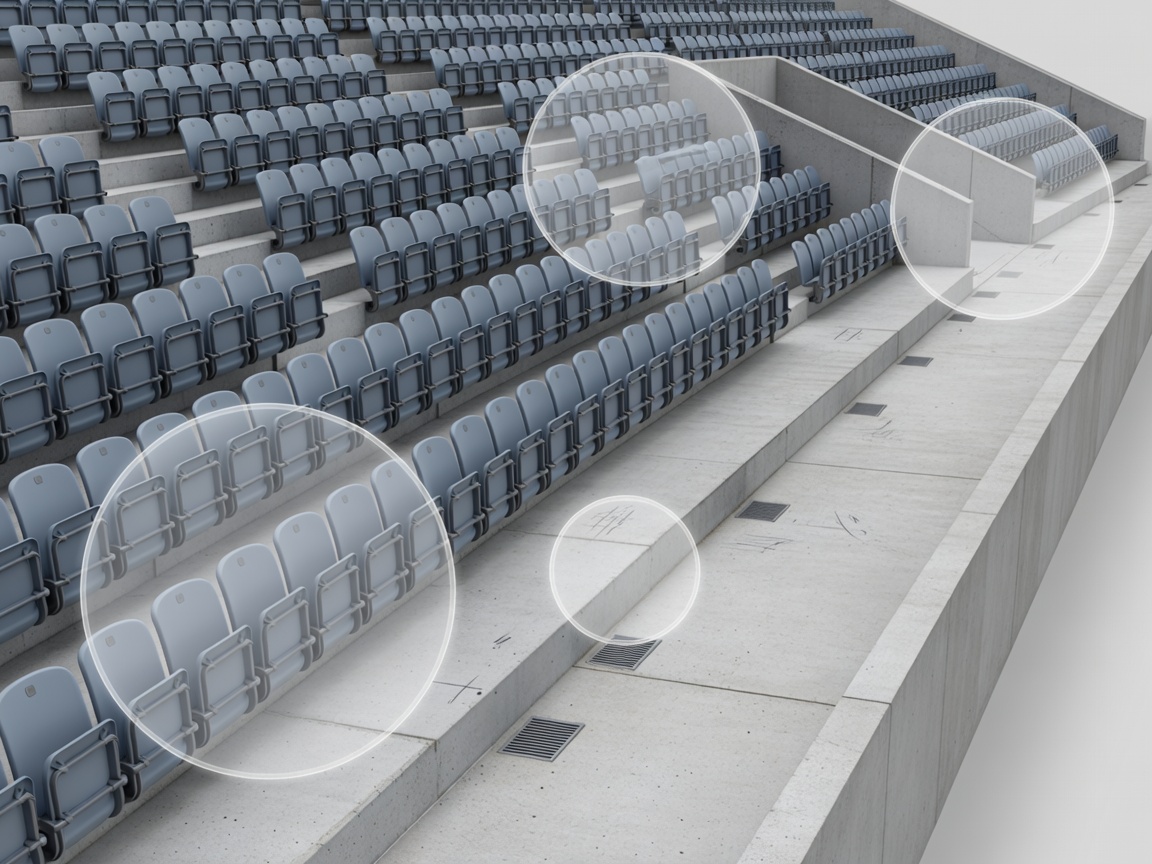
A rendered layout may hide the information required for a professional check. Supply dimensioned geometry, input sources, scenario definitions, method limitations and the record of changed assumptions. The reviewer should be able to distinguish what the model tested from what remains outside its scope. Attractive images are useful for discussion but cannot substitute for the evidence needed to assess a consequential change.
Check interfaces between disciplines. An aisle adjustment may affect sightlines, barriers, signage, maintenance access and ticket numbering. An accessible position may depend on a route controlled by a separate operational team. Inspect the complete arrangement, including temporary elements. Standards such as ISO 7010 for safety signs can be relevant to specific details, but their use does not by itself verify a venue-wide wayfinding or safety strategy.
Make consultation capable of changing the plan
Invite accessibility stakeholders early enough to influence the brief, not only to comment on a preferred answer. Offer diagrams, plain-language explanations and suitable alternatives to visual-only presentations. Describe the complete journey, including arrival and access to facilities. Consultation should make it possible to identify a problem that the optimisation objectives did not capture.
Keep a response log explaining what was raised, what changed and why some requests could not be adopted. Do not treat a small consultation group as representative of every visitor. Combine lived experience with technical assessment and relevant operational evidence. Organisations such as the Centre for Accessible Environments and Finland’s Invalidiliitto provide accessibility resources, but referencing their material does not constitute their endorsement or a project-specific assessment.
Rehearse operations within an agreed scope
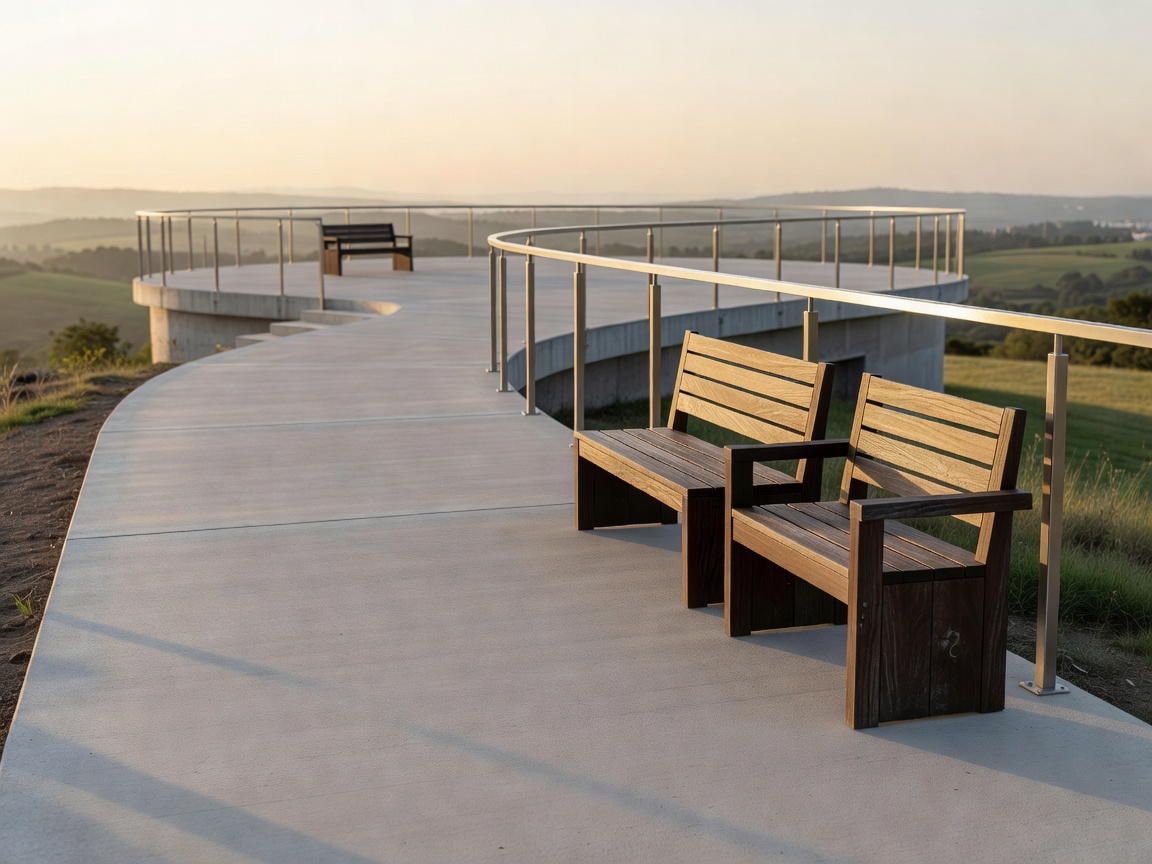
Where appropriate and authorised, use controlled walk-throughs, desk exercises or limited trials to examine wayfinding, staffing and operational handovers. A trial must have its own safe plan, responsible supervision and stopping criteria. Do not expose visitors to an unreviewed arrangement in order to find out whether an optimistic model was right.
Record differences between the planned and observed setup. A temporary barrier placed slightly differently, an unavailable lift or a missing staff position may invalidate the assumptions behind the proposal. Assess whether the design can tolerate those variations or needs stronger controls. An observation from a quiet rehearsal is not proof of performance during a busy event; describe the limits of what the exercise established.
Before an operational test
Confirm scope, authorisation, safe arrangements, observation methods and a route back to the approved baseline. Decide in advance what would stop the exercise.
Release a controlled, reviewable arrangement
When the responsible parties authorise a change, issue a coordinated set of documents. Update seating plans, ticketing references, wayfinding, staff instructions and relevant operating procedures together. Retain the superseded baseline and record the effective configuration. An approval tied to particular conditions should not be treated as blanket permission for other events or future layouts.
After use, review incidents, access feedback, staff observations and appropriate aggregate measures. Treat unexpected outcomes as reasons to revisit assumptions, not as inconvenient exceptions. If a change affects the model boundary or a hard constraint, reopen the relevant review. The central principle is continuity of responsibility: the path from data to suggestion to authorised arrangement should remain understandable long after the original simulation has been closed.
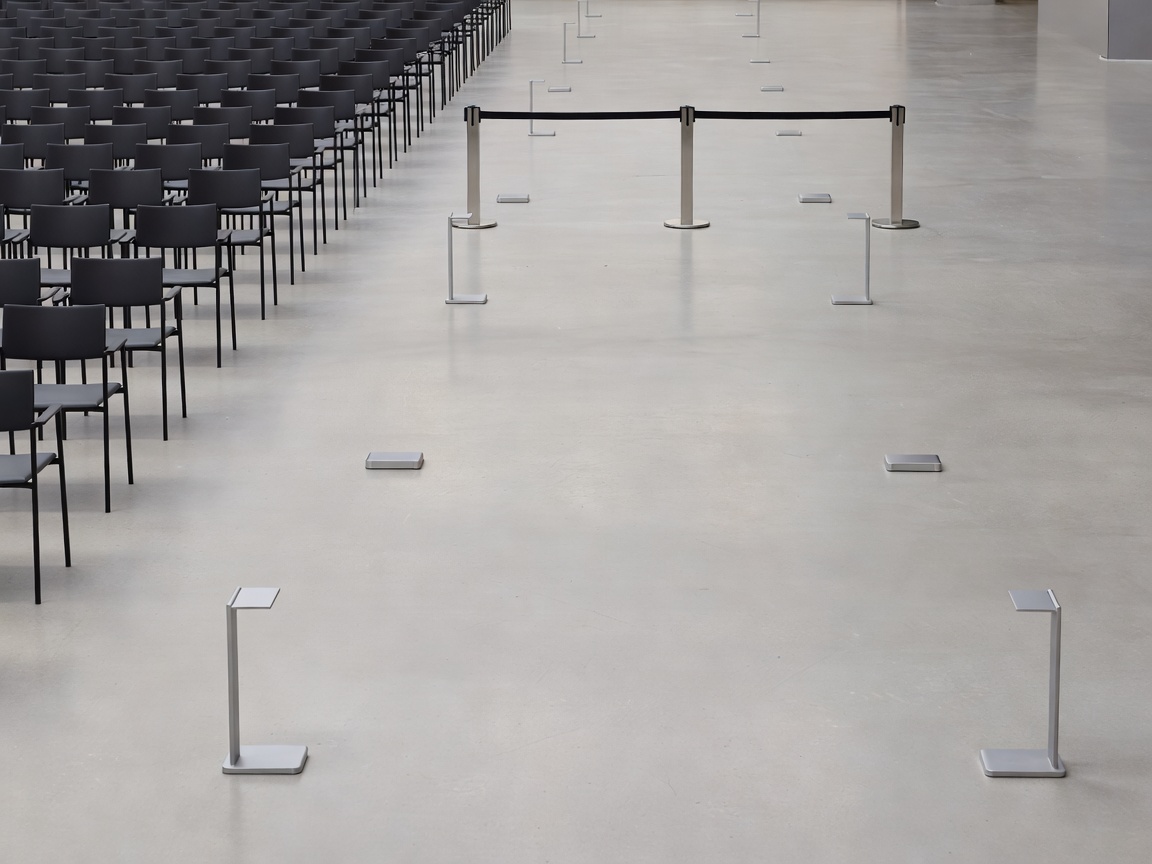
Resource starting points: Centre for Accessible Environments, Invalidiliitto and ISO. Always establish the appropriate local approval route.
Frame a planning question